Kvan & other herbs
The wold herbs of the vikings

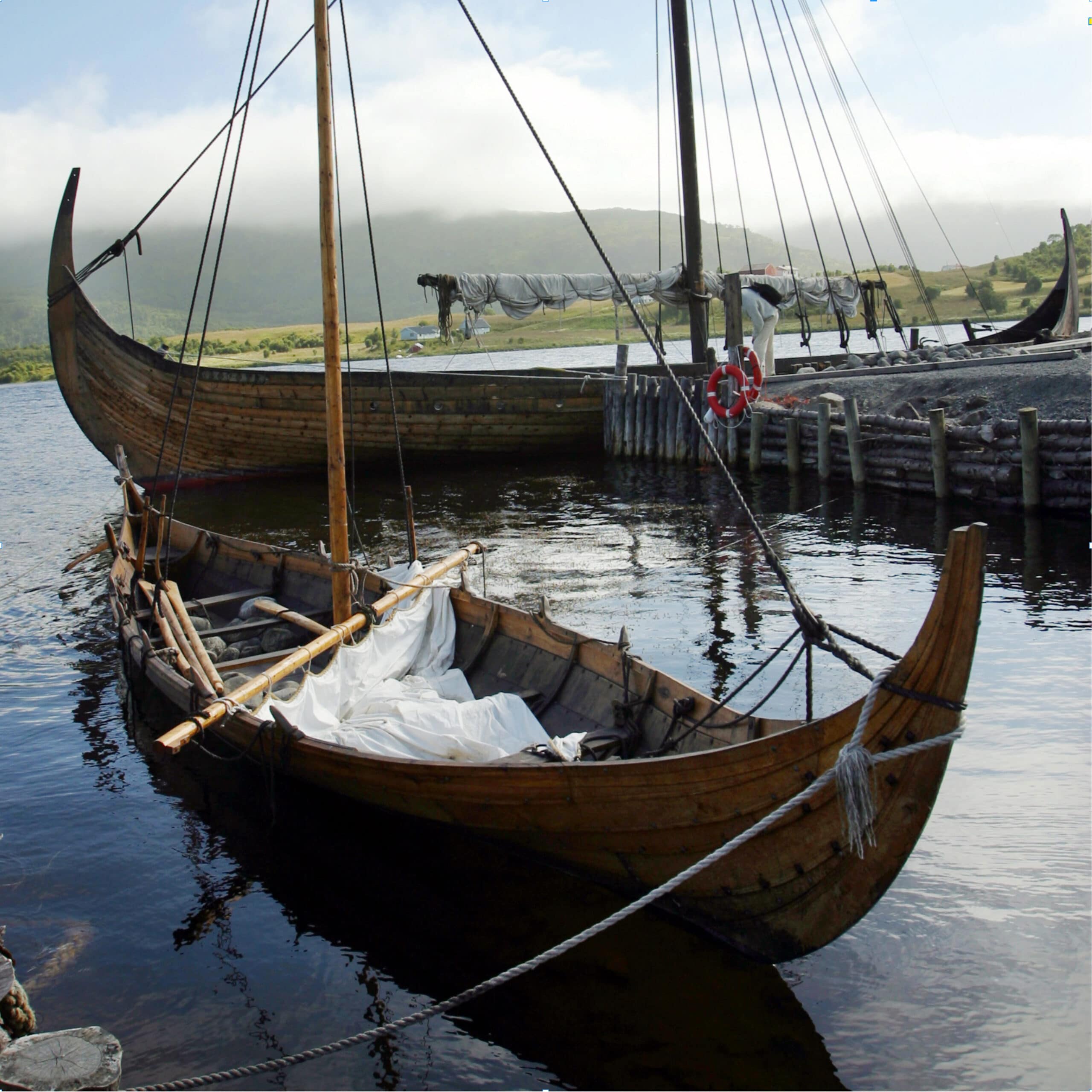
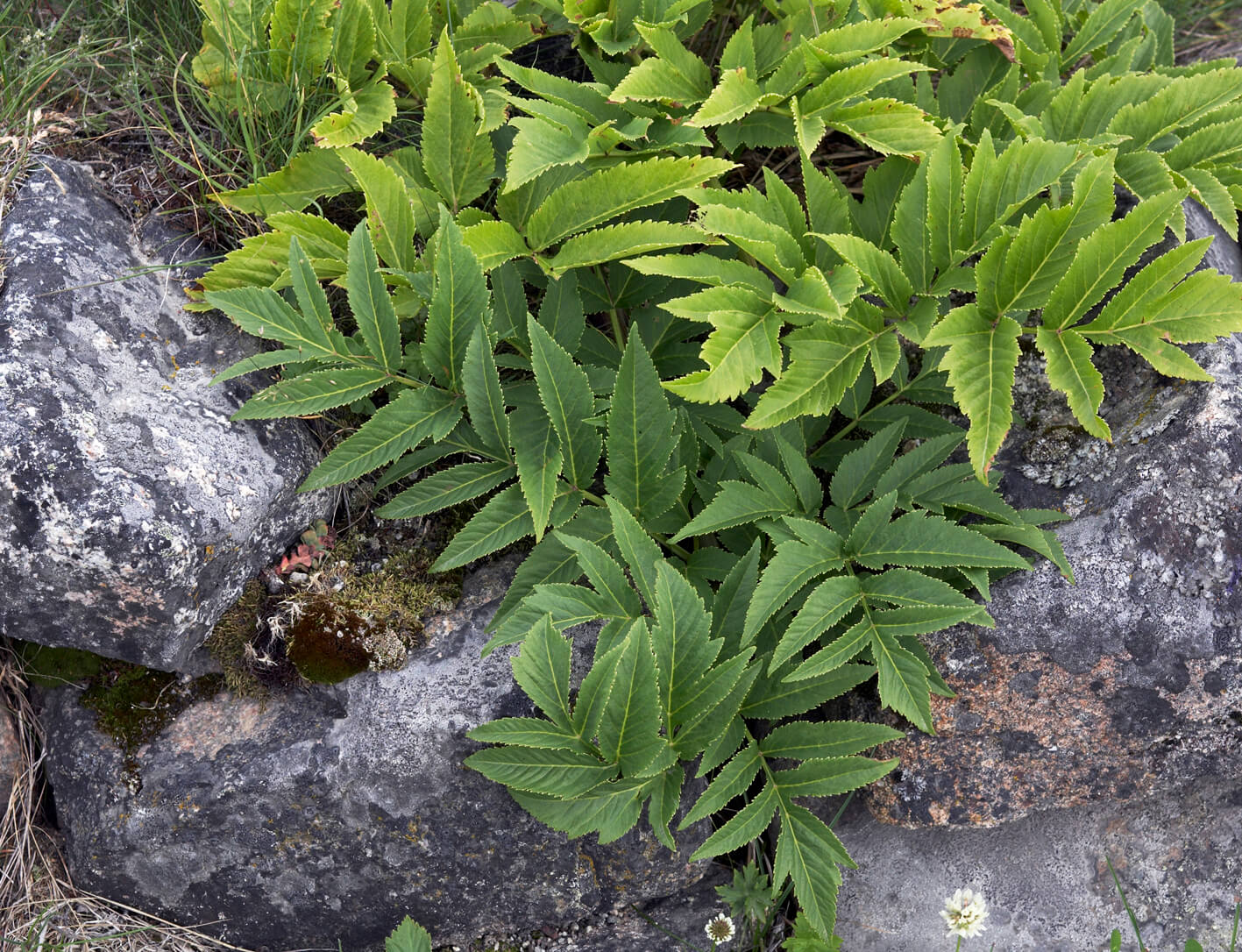
Angelica is an ancient cultivated plant in Greenland. It spread after the Ice Age in Europe, the Faroe Islands, Iceland and Greenland. The Norse and Vikings knew and used the plant and brought it with them when they went to Greenland, where it became an important source of vitamin C, preventing scurvy as well as other diseases in both humans and animals.
According to tradition, angelica was given to man by an angel – the archangel Gabriel himself, who is said to have planted it single-handedly and used it as a weapon against plague. This is why the plant is called angelica archangelica in Latin.
In the past, Greenlanders have always harvested the root (called usungusaq in Greenlandic) just after the snow had melted and eaten it with fat.
The stems were eaten with boiled cod or liver and have always been considered a delicacy. Angelica has also been preserved in fat and then stored in bags with other plants and berries for winter use. In this way, Greenlanders met a large part of their vitamin needs.
The forgotten herb
You’ll immediately notice the similarity to ginseng if you break off a stem of angelica and rub it between your fingers
Angelica has a strongly perfumed scent reminiscent of anise, musk and orange, and as the stems of the male plant are very sweet, these were previously used as a sweetener in cooking. The seeds are used as a flavoring in vermouth, gin and chartreuse, and the leaves add glow to a tasty aqua vitae. Angelica is also the characteristic flavor in Benedictine liqueur.
Due to the extreme growing conditions at the edge of the Arctic ring, angelica, as well as other herbs, has developed a very special flavor not found in similar plant species elsewhere.
A rediscovered spice
Angelica can rightly be called the forgotten spice. Not many people know the plant today, and only a small number of the older Greenlandic population use it in their households, despite it having been one of their most important cultivated plants. Kvan has been close to being forgotten.
When Kvann Kompagniet rediscovered and reintroduced angelica and other herbs from Greenland in 2009, it was because we wanted to help preserve a piece of unique flavor and cultural history that was being forgotten. That’s why, since 2012, we’ve been developing delicacies that take the scent and taste of Greenland’s wild herbs and put it into a new culinary context.
Recipes
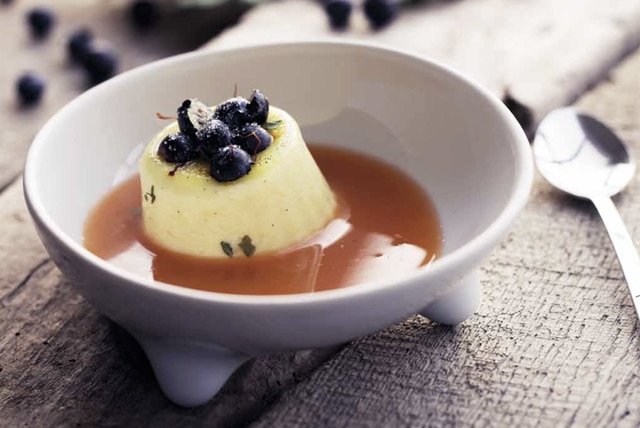
Saffron panna cotta with melon and carrot soup
2 dl skimmed milk
2 dl whipping cream
3 tbsp sour cream 38%
100 g sugar
1 vanilla pod,
scrape out the seeds
1 pinch of saffron
6 gelatine leaves
Melon and carrot soup:
1 cantaloupe melon, peeled and squeezed
2 carrots, peeled and squeezed
1⁄2 squeezed lemon
2 tbsp honey (liquid is best)
1 tbsp dried angelica
3 tbsp blueberries, cut in half
1 tbsp cane sugar
Recipe for 2 people
Here's how you do it
Soak the gelatine in cold water for 5 minutes. Then let the water drain and set aside. Heat the milk, whipping cream, sour cream, sugar, vanilla and saffron in a saucepan over medium heat until the sugar has melted. Stir constantly to prevent the milk from burning. Take the saucepan off the stove. Stir in the soft gelatine. Leave to infuse for 10 minutes. Stir again and pour into molds. Cover with cling film and refrigerate for at least 4 hours.
Melon-carrot soup
Put melon juice, carrot juice, honey and angelica leaves in a pot. Heat on low heat until the honey melts. Refrigerate for at least 1⁄2 hour. Then add the lemon juice. If you don’t have a juicer, blend the melon and carrots to a fine puree. Heat as described above, then strain the puree into a tea towel or fine sieve.
Stir blueberries and cane sugar together. Use it as a side dish.
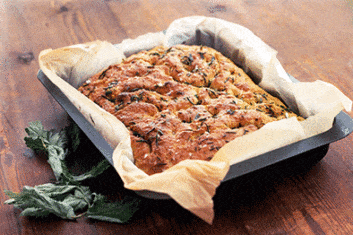
Kvan focaccia brød
25 g fresh yeast
7 dl cold water
12 dl wheat flour, half wholemeal
1⁄2 tbsp salt
1 tbsp dried angelica
rosemary oil (see below)
salt
rosemary oil
2 dl olive oil
25 g fresh rosemary
Here's how you do it
Dissolve the yeast in the cold water. Add salt, angelica and then the flour 1 dl at a time. Stir thoroughly. When all the flour has been stirred into the dough, shape it into a ball in the dish. If the dough is too loose, you can add a little more flour. Sprinkle a little flour on the dough ball at the end so that it can release the dish. Cover with a cloth and let the dough rise until doubled in size.
Line a deep baking sheet with baking paper. Grease the paper with rosemary oil and pour the dough out onto the plate. Stretch the dough to fill the plate. Let the bread rise again. Heat the oven to 200°C.
Just before putting the bread in the oven, poke a lot of holes in the dough with your fingers. Drizzle half of the rosemary oil over the dough and sprinkle with coarse salt.
Bake the bread for 1⁄2 hour. Remove the bread and brush oil on the bread again. Turn the oven down to 180°C and bake for another 1⁄2 hour. The bread should now be golden brown on the surface. Take it out and check if it is thoroughly baked, breaking off a corner if necessary. Otherwise, give it another 10 minutes in the oven. When it’s done, brush some oil on the bread again. Sprinkle with a little more coarse salt if needed.
Rosemary oil
Heat the oil to medium heat in a pan. Add the rosemary to the oil and fry for 30-40 seconds. Only until the rosemary leaves become crispy. Remove the rosemary, place it on absorbent paper and let the oil cool. Remove the coarse stems from the rosemary and roughly chop the leaves. Once the oil has cooled completely, the rosemary can be added back to the oil.
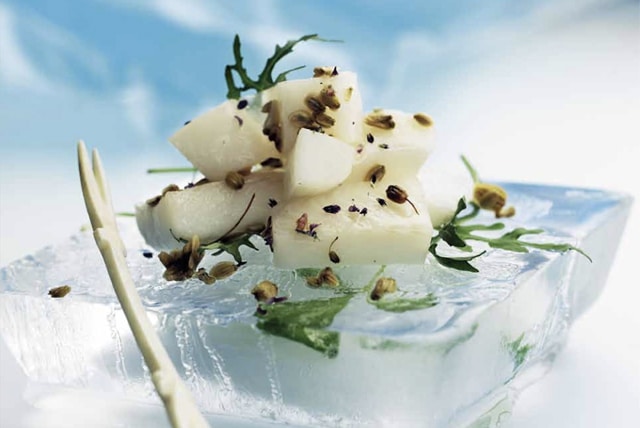
Marinated halibut with angelica and thyme
300 g halibut fillet
15 g salt
1⁄2 dl white wine vinegar
1⁄2 dl water
125 g sugar
2 tsp dried angelica
1 tbsp Arctic thyme
Recipe for 2 people
Here's how you do it
Cut the halibut into 2 x 2 cm cubes. Place them in a bowl and sprinkle with salt. Cover with cling film and refrigerate overnight. Bring the vinegar, water and sugar to the boil and add the angelica and thyme.
Cool the brine until lukewarm.
Drain the fish cubes from the brine and pour the vinegar over the fish. Refrigerate the fish for another 24 hours and then it’s ready to serve. Serve the fish on a bed of fresh rocket or small baby lettuce leaves.
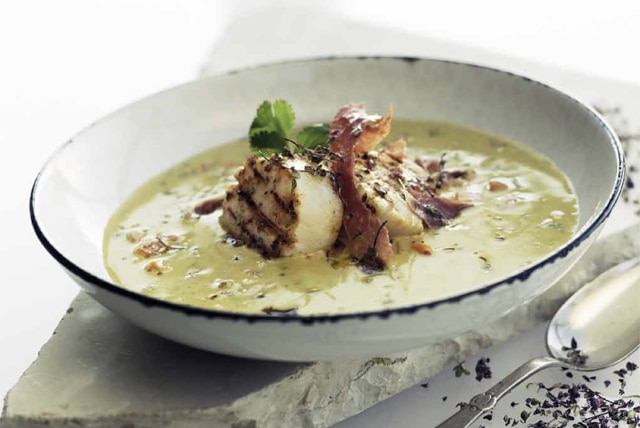
Kokos karrysuppe med kammuslinger
6 fresh scallops
1 tbsp. arctic thyme
1 organic lime – grated zest from half, juice from whole fruit
2 tbsp. olive oil
4 slices Parma ham
Kokos karrysuppe
1 tbsp. coconut milk
1 clove garlic, crushed
10 g. fresh ginger, peeled and finely chopped
50 g. diced carrots
1/3 finely chopped chili
1 tbsp. olive oil
1 tbsp. madras curry
1 tbsp. dried angelica leaves
Salt and pepper
Recipe for 2 people
Here's how you do it
Mix thyme and olive oil with lime juice and zest into a marinade and pour it over the scallops. Refrigerate for at least ½ hour.
Heat a grill pan well and apply a little oil to the ribs of the pan with a brush. When the oil starts to smoke lightly, grill the mussels for 1 minute on each side. Remove them from the pan and place them back in the marinade.
Heat a frying pan and fry the Parma ham until crispy, approx. ½ minute on each side. Place it on greaseproof paper.
Soup: Sauté the garlic, ginger, chili and carrots in the oil for 1 minute. Add the curry and sauté for a few minutes. Add coconut milk and dried angelica. Turn down the heat and let the soup simmer for 10-15 minutes. Season with salt and pepper to taste.
Pour the soup into warm plates and top with 3 scallops and roasted Parma ham.

Arctic Negroni
3 cl. blackberry gin
3 cl. Campari
3 cl. sweet vermouth or Snoremark Germuth
Here's how you do it
Fill a shallow glass to the rim with ice cubes. Pour gin, Campari and sweet vermouth into the glass. Stir for about 1 minute – the idea is that the water from the ice cubes will thin the mixture a bit. Taste during the stirring process. Garnish with a slice of orange or orange zest.

Turbot on cabbage with pomegranate salsa
300-400 g. turbot fillets
2 lightly beaten eggs
2 tbsp. flour
100 g. corn flour1 tsp. salt
1 tsp. Pepper
1 tsp. dried angelica leaves
Sautéed white cabbage
100 g. pointed or savoy cabbage, finely chopped
2 tbsp. dried angelica leaves
10 g. butter
1 tbsp. chives, roughly chopped
salt and pepper
Pomegranate salsa
1 pomegranate
½ shallot
1 tsp. dried angelica leaves
½ lime, grated zest and juice
½ tbsp. chili
1 tbsp. fresh dill, finely chopped
1 tbsp. olive oil
Salt and pepper
Recipe for 2 people
Here's how you do it
Mix corn flour, angelica, salt and pepper in a deep plate. Lightly beat the eggs together in another deep plate. Turn the fillets first in the wheat flour, then in the egg mixture and finally in the corn flour mixture. Set them aside.
Heat the oil in a pan at a low temperature and fry the fillets for about 2 minutes or until golden brown.
Saute: Heat a pan to medium temperature and melt the butter. Add the angelica leaves, sauté for about 30 seconds and add the cabbage. Sauté for another five minutes, but without browning the cabbage. If it starts to take on color, add a little water. When the cabbage is done, add chives, salt and pepper.
Salsa: Cut the pomegranate in half and knock the seeds loose by tapping the skin hard with a large spoon. Once all the seeds are out, mix them with the rest of the ingredients for the salsa and season with salt and pepper.
Read our cookbook: ‘”Mamaq – a new taste of Greenland”